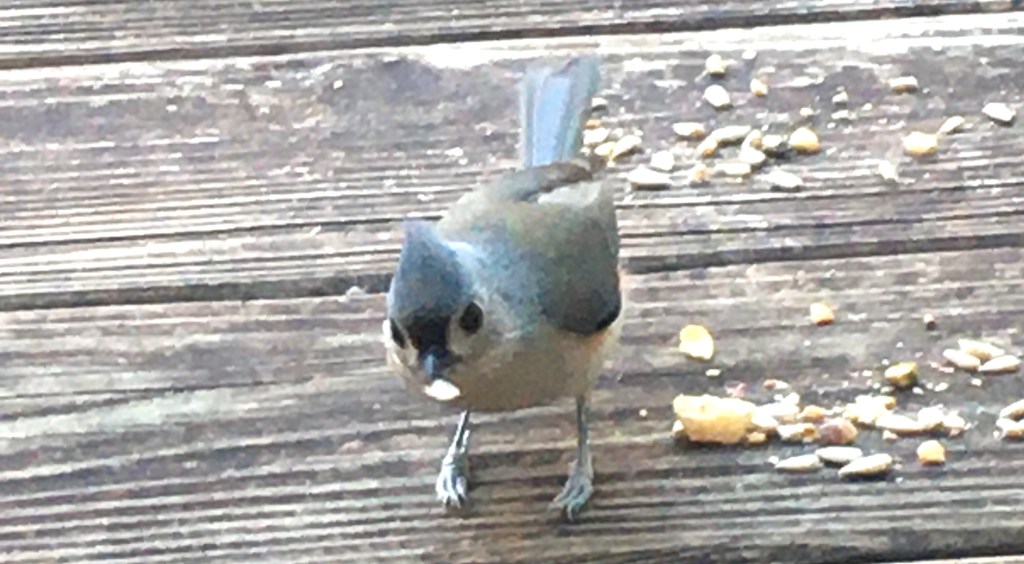
As winter deepens, I offer an invitational poem and writing prompt to explore reading and writing poetry as a sanctuary for the spirit.
For me, reading poetry is a doorway into a sacred pause. And writing poetry is more about the process than the end product. It’s about expression, not expectation. Writing poetry is listening, tuning in, and offering reverence to what I notice and discover.
Now, on to the poem…
Wintering Spirit
By Stacey Hayes
Pause—to notice the cardinal resting in the giving holly,
sheltering herself from winter’s wind.
Listen to the muted hymn of the White-throated Sparrow,
rising from the backyard thickets.
Watch the squirrels chasing each other, protecting their stashes of seeds,
sustenance for today and the days to come.
Inhale—the crisp arctic air as the cold front blows from the north,
filling your lungs with the breath of life,
filling your spirit with clarity.
Open yourself to whatever may be unfolding in this moment,
both within you and around you.
Offer yourself compassion as winter ages
and as spirit settles into sacred stillness.
This is a variation of a poem I wrote at the turning of the new year. Reflecting back on it as February begins to unfold, I find that its truths still resonate. The poem calls forth the rhythms of the immediate landscape and reminds us of simple practices that help us tune into what our spirits may be longing for. It is a poem of place and a poem of presence.
Even if you don’t think of yourself as a writer or poetry person, consider creating a poem using the words below to begin each line—honoring your own observations and quiet wisdom.
Pause…
Listen…
Watch…
Inhale…
Open…
Offer…
May you welcome the solace of the natural world.
May you welcome the sanctuary of your own words.
Wintering Mountain Mint against a backdrop of sleet and snow— January 2026, Durham, NC
The start of February has been filled with unpredictable rhythms. This time of year weather can be variable, and lately it’s been two days of winter followed by two days of spring. While I embrace the warmer days, I’ve found them to be a bit disorienting. I’m reminded that weather can influence our moods and serve as a metaphor for many things—our shifting inner landscapes, the unpredictability of our daily lives, and the changes in the world around us.
Some ancient wisdom suggests widening your lens during times of uncertainty. To broaden your perspective. And in some seasons, I find this helpful. But in this particular month, reassurance is found through my narrow lens. By zooming in on the particulars.
By taking in the little hopes all around me.
What is true and beautiful and hopeful right here? In this place? In this moment?
Today it was the ripening buds on the sprawling elm tree, hovering over the front yard in a hug. And the young daffodil shoots pushing through the ground in the woods behind our house. Just like last February. The green anole that emerged to sun on this unseasonably warm day—a sign of things to come. And the gathering of brown birds—the Carolina Wren, the white-throated sparrow, and the Hermit thrush—foraging harmoniously in the side yard.
When the wider landscape feels overwhelming, I tether myself to the particulars. By shifting our attention, we find little hopes everywhere.
“…beauty and grace are performed whether or not we will or sense them. The least we can do is try to be there.” ~ Annie Dillard, Pilgrim at Tinker Creek
a contemplative practice
Allow yourself a few moments to focus on the natural world—in your yard, out your window, on a walk in your neighborhood. Slow down enough to notice some of the particulars around you. You may want to photograph these or jot down what you noticed. When you document the particulars in images or words, they can be revisited over time and through the seasons — marking the moments and memories that bring us hope, gratitude, and joy.
How may nature’s particulars offer you hope?
In what ways do they ground you?
If you are deep in snow, ice, or other wintry weather, you may want to read last month’s post on Weathering Winter.
A month ago, these elm tree buds were covered in ice. Now they are ripening and bursting—showing hints of the flowers to come. Elm trees form flowers before they get their leaves.
I live in North Carolina where winters are chilly but rarely white. They are gentler than in more northerly parts of the world. Yet still, I find myself turning inward, seeking cozy, and nourishing my body with healthful and fat-filled foods— like the Eastern cottontail rabbits who shelter in dense thickets around our shed. Like the squirrels who curl their tails on their backs like blankets. And like the songbirds who feast in the backyard.
During an unusual cold snap this past week, I worried about the birds as night temperatures dipped into the 20s. To my relief, the next morning they sang their subtle winter songs and visited our feeders as usual. Still here.
Their resilience offered reassurance, and I was reminded of my own capacity to endure. Birds have adapted to survive the cold—storing more fat, fluffing out their downy feathers, sometimes huddling together in roost houses, and shivering to create warmth. Their tiny bodies are adept at thermal regulation.
Winter exposes our vulnerabilities.
Winter reveals beauty and resilience.
The cold bareness of winter seems to expose our vulnerabilities—my increasingly creaky joints. My too-cold toes. My dry, oft cracked skin. My need for deep rest. And my occasional resistance to sitting with silence and stillness.
The bareness of winter also reveals beauty. The simple forms of the natural world, the silhouettes of trees. The peace inherent in the stillness. The beauty in our need for warmth, community, and communion with animals.
How may we endure a season of deep winter?
By embracing its cold beauty, call to rest, and invitation to gather warmth wherever it may be found. We can lean into our own adaptations taking cues from the wildlife around us, don our coziest socks, and allow the clarity of wintry air to fill our bodies and spirits. And as Anna Brones encourages us, we can “stare up and remind ourselves that in between the dark silhouettes of bare winter branches, there is so much light that shines through.”
For Reflection ~ What does “weathering winter” mean for you?
~ What beauty is revealed in the bareness of the season—the silhouettes of deciduous trees, the sparse landscapes?
~ How can you embrace your vulnerabilities with compassion, while gathering support and comfort for them?
A Wellness Practice
Go outside for a walk in the natural world (or look out your window). Be open to wonder and see what captures your attention. You may want to take a photo or write a few words of gratitude for the beauty you encounter. Embrace the alchemy of movement, wintry fresh air, and the bare trees of this quiet season.
A Quote to Inspire Your Creative or Writing Practice
“All winter long the brown bud will sleep. While the cold crow calls into the gray sky, while the wet leaves blacken and begin their return to earth, the brown bud is waiting for its true self to unfold; a beginning that in sleep has already begun.”
If you’ve been following my work for awhile, you’ve likely noticed that “small wonders” is a theme I return to again and again. The simple gifts of the natural world never cease to delight. I hope to focus on these life giving gifts during this traditionally busy month. To slow down and reflect amidst a time of preparation—both for the advent of winter and Christmas. Alongside my “to do” lists, the practice of embracing nature’s simple gifts guides and grounds me. And fosters a sense of wonder.
As the trees are nearly bare, it may seem challenging to find small wonders in nature. But with a little attention and close observation in our backyards and local surroundings, they can be discovered. The colder, darker season offers many gifts—ripe holly berries, fragrant evergreens, a patch of soft moss, sparkling Jack Frost, and wintering birds.
Pictured above are the blue “berries” of the Eastern Red Cedar, a native juniper tree. The festive berries are actually small cones—tiny packages with nutritious seeds inside. As an important winter food source, they fill the bellies of beloved birds and remind us that each season provides sustenance for body and spirit.
May nature’s simple gifts nourish you in the days to come.
As winter and Christmas draw near, the natural world becomes quieter. It is a wonderful time to to seek the sacred in its stillness and to practice reverence.
I’ve always had a heart for birds, and my heart swells with awe for winter birds. They inspire the practice of reverence in me. All season long, I never tire of watching birds that have migrated here for winter such as juncos, sparrows, and the beloved hermit thrush. Our home becomes theirs as they’ve joined the family of our year-round feathered friends.
My heart leapt with joy the morning I saw a hermit thrush as I had been anticipating its arrival for several weeks. I was keenly aware that his journey was many miles during one autumn night, and he arrived at our home— his home.
Its arrival inspired me to write this poem:
Hermit Thrush Elegant with tones of brown. Shy, kind, and gentle. You came last winter and stayed for awhile. Where do you go as the days grow longer? I’ve seen your kind in the deep woods. You remind me to pause. May you find solace here. ~ Stacey Hayes
During the peak migratory months from September through November, my heart was filled with both wonder and deep humility for migrating birds. Writing this blessing for them was a balm for my worry as I imagined them dodging skyscrapers and navigating artificial light.
Reverence is practiced by acknowledging the gravity of their migration journeys. By beholding deep admiration for their beauty, habits, and understated songs. By offering hospitality, knowing their time in this particular place will come to an end.
Reverence reaches deep in the spirit—beyond observation and mindfulness, which can be paths to reverence. It is not only a feeling but a posture of the soul. In practicing reverence, our spirit connects deeply with another living being’s. We see its fullness—its gifts, strength and humility. There is a felt sense that my spirit connects with its spirit as if an invisible yarn knits us together, even if for a moment.
Reverence is defined as “deep respect for someone or something.” (Oxford Languages) and is derived from the Latin reverentia, or awe.
Reverence is a tapestry of attention, empathy, and expression.
We offer our attention as we carefully observe the being’s habits and personality. We offer empathy as we imagine what may bring it joy or suffering. We acknowledge its story, journey, hardships and delights.
Reverence may be so poignant that we may feel led to offer it expression in some way—through gratitude, a hope, blessing, painting or poem. It may stir us to compassion and invite tending such as offering protection or shelter.
Or perhaps we simply hold this experience within our heart as we go about our day—allowing it to engender wonder and care.
Much is written in psychological literature about the benefits of finding novelty in a change of scenery or traveling. Of seeking awe in new experiences. However, I find reverence in the ordinary — in the familiar song of the Carolina Wren whose tune resounds from our deck each morning. In the comforting predictability of cottontail rabbits munching in our side yard at dusk. And while my life is enhanced and my best self revealed in these moments, reverence in its purest form is ultimately not about me and my wellness. It’s about another, the vastness, and honoring the sacred in front of me.
Practicing reverence, I assure you, will make an ordinary day extraordinary. And thankfully reverence isn’t reserved for mountaintop experiences. It dwells in the familiar. It rests in the ordinary. It is enlivened by the intimacy of knowing the creatures around you.
Welcome the wonder of birds into your life by listening for their winter carols, hanging a bird feeder, and providing a bird bath.
Or, simply step outside your front door or peek outside your window. See what calls out to you and invites your attention.
Practice reverence to warm your soul on a cold winter’s day.
January invites us to both reflect and look forward with its freshness and hope. Some people may make resolutions, goals, or set intentions for the coming months. This year I’ve decided to choose a “Wisdom Word” that will root, guide, and inspire me this year as I move through everyday life.
I love language, and there have always been certain words that speak to my heart. Some of these include connect, create, and inspire. Looking back, my life has been guided by these words, especially when I have taken care of myself and had the time and energy to engender connection, creation and inspiration.
In busy times, chaotic times, transition times, or times of grief, these words have taken a back seat. During these seasons, I gave myself the grace to be gentle with myself and focus on only what was needed. But even in those times, connection sustained me.
Connection has always been important to me. Connection with my truest self, having genuine and authentic connections with others, and connecting in an intimate way with the natural world around me. When I am present and open, I see the people, animals, trees and plants for their true nature and feel connected to all.
This year, the word CULTIVATE speaks to me and will be my Wisdom Word. Cultivate is a derivative of the Latin colere “to practice, respect, tend, guard” (Online Etymology Dictionary). Cultivate has several definitions all of which reflect my values.
Cultivate: “to prepare and use for the raising of crops” “to foster the growth of” “to improve by labor, care or study” “further, encourage” “to seek the society of : make friends with”
Merriam Webster
These meanings inspire me…to cultivate growth in myself, to cultivate curiosity and learning as I homeschool my child, to cultivate deeper relationships with family and friends, to cultivate my desire to honor nature, and to cultivate the Soulful Seasons community.
An Invitation to Choose Your Wisdom Word
Would you like to have a wisdom word this year?
Think of a few words that have special meaning for you. They may be active, descriptive, or a noun. Invite those words to be present in your heart and mind. Does one of the words speak more loudly or resonate more harmoniously with you? Maybe the word chooses you?
You could explore the word more deeply by looking up its defnition or etymology. Or, take a moment to journal about the word and what it may mean in your life. You could also create an image (drawing, collage, or photo) that represents or expresses your Wisdom Word more fully.
Does your Wisdom Word reflect your values? Does it root you? Does it guide you? Does it inspire you?
Your Wisdom Word may guide you for a month, a season, a year, or for a particular life transition. It need not be limiting or confining….just a gentle guide that is present with you as you move through the days.
This time of year the darkness comes early (around 5:00pm where I live). Many of us fill our homes with candles, strings of lights, and other decorations to bring light in the darkness. Neighborhoods light up with outdoor decorations.
Nature also senses this darkness as winter approaches. Deciduous trees become dormant, and animals prepare for the cold weather by storing up fat reserves and food, or by migrating or hibernating.
A few things in nature thrive in the colder weather and reduced sunlight. Holly begins to produce its fruit– bright red berries– in late autumn and winter. The lush evergreen leaves offer hope in the December landscape.
Evergreens such as holly remind us that there is light in the darkness.
For those who celebrate Advent, this is a season for preparing mind, heart, and spirit for Christ’s birthday. Candles are also lit during early December for Hanukkah, the Festival of Lights. As we get closer to the Winter Solstice (December 21st), we experience the longest night with the promise that daylight will gradually increase.
For those who are grieving, it may be especially difficult to face family gatherings, festivities, and holiday cheer. In a way, it may feel as if your spirit and emotional self have become dormant. Some churches acknowledge and honor others’ grief by offering a “Longest Night Service” on or near the Winter Solstice. The songs, messages, and prayers of this service are sensitive to mourners.
If this is a period of grief or disorientation for you – a dark night of the soul – remember that you are not alone and that the darkness will not endure.
While in the darkness, we can be gentle with ourselves…focusing on what is life giving. We can take solace in nature as it is always there for us, offering comfort in its patterns and beauty.
We can abide with those needing support and find ways to let our inner lights radiate…offering our hope, service and presence.
My hope is for all to find light in the darkness this season.
If you would like to connect with nature in a meaningful way this season, consider using Advent in the Forest. Follow along with your head, hands, and heart as woodland flora and fauna journey to Christmas.
It is November, the heart of fall, and Jack Frost had his first visit recently. The days are shorter, the nights are colder, and clocks are set back. Animals have taken the season’s cues and are preparing for the winter ahead. Birds flock in droves. Turtles take cover under leaves. Squirrels fluff up their dreys. And frogs find shelter in holes, under leaves or mud.
A pair of Carolina Wrens are frequently seen singing on my deck and recently starting sleeping in this little roost house on my front porch. Other birds may find warmth in bushes and trees, but wrens like to be near the house.
I’ve also been roosting. I’ve gotten out extra blankets and made soups, muffins and hot tea.
Roost: a support on which birds rest; to settle down for rest or sleep ~ Merriam Webster
Reflect
Squirrel dreys look messy but are excellently engineered and very warm. Squirrels do not hibernate but will rest for long periods in a drey during cold weather.
You may want to think about a space that comforts and nourishes you. It will be very particular to you – your tastes, desires, and personal creature comforts. It may include your favorite books, a candle, or objects with special meaning for you. You can think of this as your own roost, or safe space for resting and retreating as the days grow colder.
~ When I think about creating a place where I will be restored, I imagine. . . ~ Is it spacious or small? ~ The colors that provide me with comfort are. . . ~ Objects that have special meaning for me . . . ~ Other elements that help me to feel safe or cozy (warmth, light, natural elements, etc)
Create
Carolina Wren
If you feel inclined, you could explore this further by making your own “roost” that will support and nourish you as we enter the last weeks of fall and prepare for winter. Using art materials that you enjoy, make a roost such as:
~An image using pastels, colored pencils, or markers ~A collage created with scrap paper, fabric, ribbon, yarn or twine ~ A watercolor painting ~ A three dimensional roost made with nature materials or clay
“In a hole in the ground there lived a hobbit. Not a nasty, dirty, wet hole, filled with the ends of worms and an oozy smell, nor yet a dry, bare, sandy hole with nothing in it to sit down on or to eat: it was a hobbit-hole, and that means comfort.”