Compassion, Seasonal Wisdom, Water

Weathering Winter

On Bareness, Beauty & Resilience

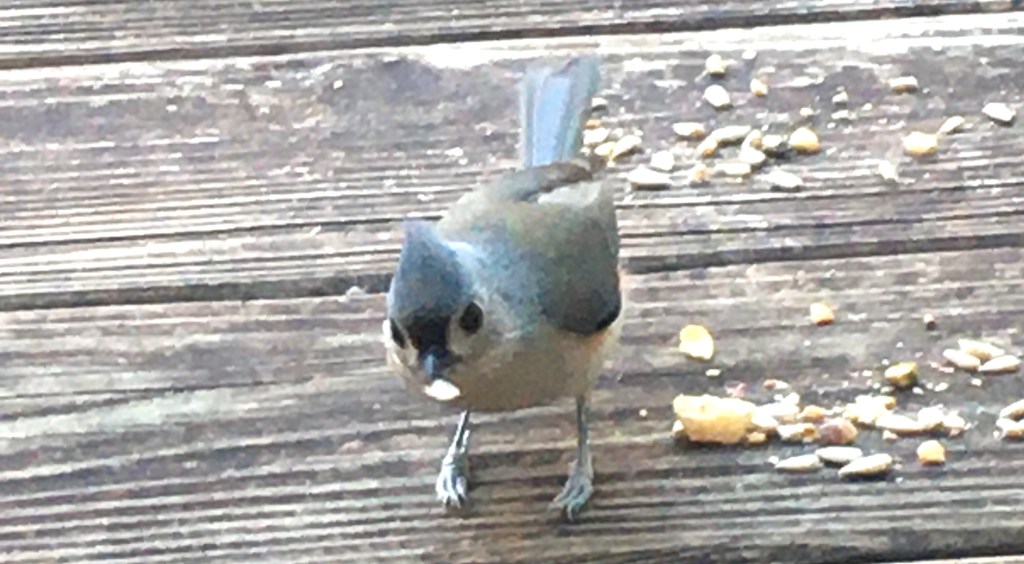
I live in North Carolina where winters are chilly but rarely white. They are gentler than in more northerly parts of the world. Yet still, I find myself turning inward, seeking cozy, and nourishing my body with healthful and fat-filled foods— like the Eastern cottontail rabbits who shelter in dense thickets around our shed. Like the squirrels who curl their tails on their backs like blankets. And like the songbirds who feast in the backyard.

During an unusual cold snap this past week, I worried about the birds as night temperatures dipped into the 20s. To my relief, the next morning they sang their subtle winter songs and visited our feeders as usual. Still here.

Their resilience offered reassurance, and I was reminded of my own capacity to endure. Birds have adapted to survive the cold—storing more fat, fluffing out their downy feathers, sometimes huddling together in roost houses, and shivering to create warmth. Their tiny bodies are adept at thermal regulation.

Winter exposes our vulnerabilities.

Winter reveals beauty and resilience.

The cold bareness  of winter seems to expose our vulnerabilities—my increasingly creaky joints. My too-cold toes. My dry, oft cracked skin. My need for deep rest. And my occasional resistance to sitting with silence and stillness.

The bareness of winter also reveals beauty. The simple forms of the natural world, the silhouettes of  trees. The peace inherent in the stillness. The beauty in our need for warmth, community, and communion with animals.

How may we endure a season of deep winter?

By embracing its cold beauty, call to rest, and invitation to gather warmth wherever it may be found. We can lean into our own adaptations taking cues from the wildlife around us, don our coziest socks, and allow the clarity of wintry air to fill our bodies and spirits. And as Anna Brones encourages us, we can “stare up and remind ourselves that in between the dark silhouettes of bare winter branches, there is so much light that shines through.”


For  Reflection
~ What does “weathering winter” mean for you?

~ What beauty is revealed in the bareness of the season—the silhouettes of deciduous trees, the sparse landscapes?

~ How can you embrace your vulnerabilities with compassion, while gathering support and comfort for them? 

A Wellness Practice

Go outside for a walk in the natural world (or look out your window). Be open to wonder and see what captures your attention. You may want to take a photo or write a few words of gratitude for the beauty you encounter. Embrace the alchemy of movement, wintry fresh air, and the bare trees of this quiet season.

A Quote to Inspire Your Creative or Writing Practice

“All winter long the brown bud will sleep. While the cold crow calls into the gray sky, while the wet leaves blacken and begin their return to earth, the brown bud is waiting for its true self to unfold; a beginning that in sleep has already begun.”

~ Margaret Renkl, The Comfort of Crows

Contemplative Practices, Ecotherapy, Seasonal Rhythms

Autumn’s Song

A Season of Savoring

I’ve been hearing the distinct and familiar whistle from the woods telling me it’s November. The notes of the white-throated sparrow saying, “I am here.” And I’m grateful this migrant bird has returned safely to its wintering home.

Piercing through the drone of leaf blowers, the haunting tune mirrors fall’s spirit of letting go. The leaves drop, dancing as though choreographed to the sparrow’s song.

The song invites me to pause. To savor.

Meanwhile, societal cues attempt to fast forward me to the next holiday, bypassing this month of understated beauty. November can easily be overlooked. But I can choose to take cues from nature’s rhythms—the arrival of migrating birds (and their songs). The half-bare, half-leaved elm outside my window. Wispy, white seeds traveling with the autumn wind. The muted light of dusk, which falls earlier each day.

In this month of things dying back, there is a nourishing feast for the senses waiting to be savored. Savoring can be thought of as deep appreciation. The Old French savorer “to taste, to breathe in; to appreciate, care for” (etymology.com) sums up this contemplative practice. The natural world is the perfect place to do this. 

As we slow down, we notice, we sense, we feel, and we become more appreciative. We honor the details in our visual landscapes. And the songs of our aural landscapes. Savoring points us to the sacred in the ordinary, and we begin to walk in beauty.

In this shifting landscape—transforming before me, moment to moment—the soulful notes of the sparrow rise up above the chaos. This little bird enchants. It sings: “I am home. We are here together.” And I savor each refrain.

Seasonal Invitations
~ What autumn song do you hear? You may want to go outside for a few minutes and make a list of all nature’s sounds that you notice. Or perhaps make a sound map.

~ What in natural world this time of year can remind you to take a micro pause—to savor the small wonders around you? 

~ Embracing micro seasons is another way to savor natural rhythms. Read more here.

Migrations, Nature’s Wisdom, Seasonal Rhythms

A Season of Transitions

On Molting & Renewal

The past few weeks, I’ve noticed the process of molting in the bird world. The Cardinal shedding his head feathers. The Carolina Wren hopping around without a tail feather. And all sorts of fledglings born earlier this summer growing in their adult feathers.

Stubby. Shaggy. Raggedy.

These are not the first words that usually come to mind when thinking about songbirds. They look awkward and not quite like themselves, yet, they are exactly what they need to be in this season. They are perfectly imperfect.

Molting is a process they can’t control. It’s governed by circadian rhythms, the changing light, and the turning of seasons. Molting is a season of vulnerability for birds. Feathers are used not only for flight but for camouflage, insulation, sun protection, swimming, and making sounds. Birds take care as best they can during this time—conserving their energy to grow new feathers, eating more protein, and seeking shelter. Though arduous, molting is a regenerative natural rhythm that prepares birds for what’s to come—be it migration or colder weather.

Molt stems from the Old English mutian meaning to change.

I often think of September as an in-between season. A time of change and transition. Routines and rhythms begin to shift. Our minds, hearts, and bodies begin to adapt to seasonal changes. As my own feathers feel a bit weathered and worn, I’m reminded that letting go of what no longer resonates with my values or priorities makes space for new growth and opportunities. Midlife (or whatever life season you may be in) is an opportune time to embrace the wisdom embodied in cycles of release and renewal — as autumn will soon remind us in a myriad of ways.

In the meantime, we can take our cues from birds and nourish ourselves in body and spirit during times of transition. Making space to rest and restore, releasing what no longer serves us. Because molting, like most seasonal rhythms, can guide us and point us toward hope.

“I watch the bald Cardinals feeding their fledglings, and I know they feel awful. I remind myself of what I cannot remind them–that raggedness is just the first step toward a new season of flight.”

~ Margaret Renkl, The Comfort of Crows

for reflection

You may want to use these questions as writing prompts for journaling or perhaps just to ponder while watching birds.

~ How may I meet my own “molting” process with compassion, gentleness, and patience?

~ What wisdom may I discover in cycles of release and renewal?

ways to support molting and migrating birds

~ Offer protein-rich foods such as seeds and suet.

~ Hang roost houses as the nights become cooler.

~ Turn off unnecessary lights, especially between 10pm-6am as these can disorient birds migrating at night.

Contemplative Practices, Ecospirituality, Ecotherapy, Nature & Healing, Seasonal Wisdom

A Season of Song

the art of listening

I often lie half awake at dawn, listening to the chorus outside my window. These are sounds of comfort, reassurance, and beauty. My heart is grateful for each and every feathered being with both their individual signature voices and their collective symphony. Spring is undeniably a musical season. Birdsong crescendos as we approach the fullness of nesting season. And the dawn chorus heralds our own spring awakenings.

Birdsong awakens me to the gift of listening and the gift of being heard.

My son recently made a “soundscape map.” With a circle representing himself in the middle of the page, he sat outside and listened. First, he noticed the wind rustling through pine needles and the young leaves on the deciduous trees. Squiggly lines were drawn in the upper right of the page to denote wind. The drone of construction vehicles in the distance was marked in the bottom left corner by jagged lines. After listening more deeply, he enthusiastically drew circles around and around his own inner circle announcing, “The birds are singing all around me.”

Birdsong can easily become background noise that we are unaware of or desensitized to. Or, it may be muffled by soundproof walls, noise pollution, or our own racing thoughts. Not to mention that many songbird populations are declining, along with their songs. For birds, singing is purposeful work—to claim and defend their territories and to attract mates with hopes of continuing their songs.

Both human experience and scientific research tell us that listening to birdsong, especially in your local habitat, calms the nervous system. We are grounded in our senses while becoming more connected to the natural world. We become more rooted to our local landscapes as we cultivate a sense of belonging. When I hear the familiar chewy, chewy, chewy of the Carolina Wren perched on the deck post, the distinctively spring purty, purty, purty of the Northern Cardinal in the tree branches, and the trilled drink your tea! of the Towhee from the underbrush of the azaleas, I know I am home.

Hearing is a sense. Listening is a matter of attention.

I’ve noticed that there are different qualities of my own listening in the span of an hour. As a trained therapist and someone with high sensitivity, I at times offer an empathetic ear, which requires deep, close listening. There is a quiet listening when attuning to my inner voice and intuition. And there is often a distracted brand of listening when I am multitasking, tired, or overstimulated.

Attuning to birdsong can be a simple, contemplative practice that helps us to slow down, be present, and offer our attention with ease. When I listen to birds, I attend without strain or striving. I am both energized and relaxed simultaneously. Tuning into birdsong also helps me to be more attuned to seasonal rhythms as I note how those songs change throughout the weeks, months, and seasons. I have been savoring the whistling song of the White Throated Sparrow who has wintered here— knowing it will migrate north any day now for nesting season. By listening, we honor the wonders around us.

an invitation

My invitation this month is simple: to listen. To let the expansive songs of our feathered friends call out to you. Soothe you. And move you. Allow their songs to embrace you as they encircled my son on that windy spring morning.

Ecospirituality, Ecotherapy, Migrations

Practicing Reverence: The Wonder of Winter Birds

As winter and Christmas draw near, the natural world becomes quieter. It is a wonderful time to to seek the sacred in its stillness and to practice reverence.

I’ve always had a heart for birds, and my heart swells with awe for winter birds. They inspire the practice of reverence in me. All season long, I never tire of watching birds that have migrated here for winter such as juncos, sparrows, and the beloved hermit thrush. Our home becomes theirs as they’ve joined the family of our year-round feathered friends. 

My heart leapt with joy the morning I saw a hermit thrush as I had been anticipating its arrival for several weeks. I was keenly aware that his journey was many miles during one autumn night, and he arrived at our home— his home.

Its arrival inspired me to write this poem:

Hermit Thrush
Elegant with tones of brown.
Shy, kind, and gentle. You came last winter and stayed for awhile. Where do you go as the days grow longer? I’ve seen your kind in the deep woods.
You remind me to pause. May you find solace here.
~ Stacey Hayes

During the peak migratory months from September through November, my heart was filled with both wonder and deep humility for migrating birds. Writing this blessing for them was a balm for my worry as I imagined them dodging skyscrapers and navigating artificial light.

Reverence is practiced by acknowledging the gravity of their migration journeys. By beholding deep admiration for their beauty, habits, and understated songs. By offering hospitality, knowing their time in this particular place will come to an end.

Reverence reaches deep in the spirit—beyond observation and mindfulness, which can be paths to reverence. It is not only a feeling but a posture of the soul. In practicing reverence, our spirit connects deeply with another living being’s. We see its fullness—its gifts, strength and humility. There is a felt sense that my spirit connects with its spirit as if an invisible yarn knits us together, even if for a moment.

Reverence is defined as “deep respect for someone or something.” (Oxford Languages) and is derived from the Latin reverentia, or awe.

Reverence is a tapestry of attention, empathy, and expression.

We offer our attention as we carefully observe the being’s habits and personality. We offer empathy as we imagine what may bring it joy or suffering. We acknowledge its story, journey, hardships and delights.

Reverence may be so poignant that we may feel led to offer it expression in some way—through gratitude, a hope, blessing, painting or poem. It may stir us to compassion and invite tending such as offering protection or shelter.

Or perhaps we simply hold this experience within our heart as we go about our day—allowing it to engender wonder and care.

Much is written in psychological literature about the benefits of finding novelty in a change of scenery or traveling. Of seeking awe in new experiences. However, I find reverence in the ordinary — in the familiar song of the Carolina Wren whose tune resounds from our deck each morning. In the comforting predictability of cottontail rabbits munching in our side yard at dusk. And while my life is enhanced and my best self revealed in these moments, reverence in its purest form is ultimately not about me and my wellness. It’s about another, the vastness, and honoring the sacred in front of me.

Practicing reverence, I assure you, will make an ordinary day extraordinary. And thankfully reverence isn’t reserved for mountaintop experiences. It dwells in the familiar. It rests in the ordinary. It is enlivened by the intimacy of knowing the creatures around you.

Welcome the wonder of birds into your life by listening for their winter carols, hanging a bird feeder, and providing a bird bath.

Or, simply step outside your front door or peek outside your window. See what calls out to you and invites your attention.

Practice reverence to warm your soul on a cold winter’s day.

Uncategorized

Flexing Your Wings: Fledglings Take Flight

If you have followed my newsletters or the Soulful Spring Guide, you may have explored nesting as a metaphor for safety, support, and sanctuary.

Nature now tells us that it may be time to fledge the nest.

During the past couple of weeks, I have seen the baby bluebirds in our backyard fledge the safety of their nest. I literally saw them fly out of the bluebird house for their first flight.

This is a rare thing to see. A clue that birds may be fledging soon are observing them peek out of their nesting cavity. They may spend several hours peeking out of the hole in the nest box — with curiosity, wonderment, and fear — before taking flight.

About a week later, Carolina Wrens who were nesting in a roost house on our deck fledged. We were able to witness them getting fed and as they grew, peeking out of their nest with wonderment.

These fledgling birds are courageous…trusting their instincts, trusting that they have the strength to take flight, and trusting that the support they need will be there when they spread their wings.

Feathers found in or near our backyard.

When we humans think about “leaving our nest,” we usually associate that with leaving our family of origin to go off to college, a new job, or whatever life has in store for us at the time. But in actuality, I believe we are “fledglings” many times throughout our life span. . . . anytime you try something new, take a risk, or start a new phase in life.

This “taking flight” may be a change in our external circumstances – getting married, moving, starting school or a new job, starting a new creative venture, or having a child. Or, our fledgling selves may be born of something internal such as newfound wisdom or spiritual searching and growth.

We often begin again, and again, and again.

Regardless of what brings us to a fledgling time in life, we may feel excited, curious, fearful, courageous, or resistant.  These feelings should be expected and fully embraced.

Are you at a fledgling time in your life? If so, it may be helpful to explore these questions with a trusted friend, in a journal, or through artistic expression:

  • What is piquing your curiosity right now? What change may be stirring?
  • Are you in a phase of transition?
  • What support will be there for you when you are ready to “fledge”? What support do you need to seek?
  • Do you trust that you have the inner and outer resources you need to flex your wings?
  • What makes it difficult to trust?
  • How can you offer gentleness and patience to yourself as you flex your wings?
Carolina Wrens just a few days before fledging the nest.