Compassion, Ecotherapy, Nature & Healing, Parenting, Seasonal Rhythms, Self Care

Love, Not Luck

On Honoring the Season You’re In

The first weeks of spring brought sickness to our family, reminding us of our vulnerability and resilience – caring for each other as best we could and leaning into gentle days, even as my inner voice said: You need to be doing this and that, we’re missing out, we’re getting behind and getting left behind!

When everything outside is expanding and bursting and blooming, here we were contracting and resting and recovering. It’s rare for my 11-year-old not to have endless energy and want to be out of doors. Being constantly curious and into all the things. But this illness really slowed him down.

So we sought out gentle activities that took me back to young motherhood when we explored the world through the eyes of a toddler. Taking us back to a not-so-distant era when finding four leaf clovers was enough.

Even though we were well beyond St. Patrick’s Day and on the other side of Easter, looking for four leaf clovers was good medicine. We wandered outside in search of thick green patches—in the yard and along the sides of the trails. Finding these rarities asked us to slow down, stoop down, and embrace slow time. It invited us to smell the newly green earth, taking note of rebirth on the smallest of levels.

Our quest was—quote, unquote—unsuccessful. That day we did not come away with the treasured four-leafer, but what we found was an unexpected gift. We spotted an unusual three leaf clover with heart-shaped leaves, either formed naturally that way or perfectly nibbled into hearts by a critter.

On the return home while cherishing the simple moment together, I whispered to my son, “I’d much rather have love than luck.” He wholeheartedly agreed.

Over the next few days, this slow rhythm became our healer.

Spring’s fullness — full blooms, full symphony, full nests — did not mirror our  personal season of convalescence, at least for a time.  For now, we’ll honor the contrast that will inevitably give way to busier spring days of school lessons, soccer games, chores, gardening, and travels.

Whatever season we may find ourselves in, may we be reminded of love’s gifts, that gentle days are sometimes needed, and that smelling a patch of fresh clover is good medicine.

Contemplative Practices, Ecotherapy, Seasonal Wisdom, Self Care, Writing

The Gentle Unfolding

Rhythms that Sustain Us

Yesterday the wind whipped, and I just wanted to stay under my blanket. But the gusts kept calling for me—for me to discover the slow, steady unfolding in my own backyard. 

I noticed the bird song sustaining as sunbeams elongated in late afternoon.

I noticed hope emerging in those same songs as new fragments of nests were nestled in thickets.

I noticed quiet growth in the speckled young leaf of the trout lily, unearthing itself in the back woods.

I noticed the elm buds peeking out of their winter cocoons.

I noticed the warming of burgundy tree buds as they unfurled on maple branches.

I noticed this body of mine craving deep dreaming and deep rest — even as the earth softens and the slumbers of late winter loosen.

I noticed that in this season, rest and creation can be held together — in the song of the wren, in the cup of a half-formed nest, and in the nascent bud of a daffodil.

This quiet, steady growth in all its forms is a sustaining rhythm. Muted and understated in a culture where loud, showy, and “more” usually get all the attention.

The whispers of this in-between season offer an alternative.

Where less is more.

Where slow is sustaining.

Where silence speaks volumes.

Where kneeling to meet the small wonders underfoot is a posture of strength.

Where life is not hurried or pressured, but steady and measured.

Where we can lean into our own gentle unfolding, so beautifully modeled to us by the stirrings in our surroundings.

Where we make space in our days for stillness. For noticing.

And for following the call of the wind.

A Creative Invitation

A “Wonder Wander:” You may want to wander in your surroundings to notice what’s unfolding around you—and perhaps take photos to document your observations. 

Consider writing a poem or journal entry inspired by your “noticings,” weaving in some of these words that speak to you:

Quiet. Slow. Steady. Patient. Gentle. Trusting. Wisdom. Song.

Trout Lily in the Backwoods
Contemplative Practices, Ecotherapy, Seasonal Rhythms, Self Care

Bee Balm for the Soul

I’ve been watching the bee balm grow in a pot on our deck over the past few weeks. It’s attracted bees and the resident hummingbirds. Observing the plant has become a meditation, a slow down moment. It encourages mindful attention that stills my soul.

This plant meditation has evolved into a musing on balms. Just thinking about and saying the word balm feels soothing. I relish the richness and history inherent in words through studying their etymology. And for balm I discovered:  “any aromatic preparation used in healing wounds or soothing pain, or as a perfume or in anointing.” (14th C, etymology.com)

Anointing. A word I’ve heard often in past chapters of life but can’t exactly pin down. My research uncovered that anointing has three purposes – “health and comfort, as a token of honor, and as a symbol of consecration.” (Wikipedia)

Imagine it. A balm gently placed on your head by a loving soul to heal. To comfort. To honor. To make sacred.

Bee balm (Monarda) is used ceremonially, medicinally, and for culinary purposes by some Indigenous cultures. Part of the mint family, it’s native to North America. Bee balm is a salve for the skin and an antiseptic.  It’s used as a spice and for tea. And it has properties of healing, soothing, and purifying.

Bee balm is a balm for my local habitat. It calls out to the bees, the moths, the butterflies, and the hummingbirds.

It calls out to me. 

Amidst a micro season of minor unfortunate personal events, including a flat tire on a hot day, a pet emergency, and garden variety decision fatigue (yes, that’s a real thing), I was in need of a balm. My personal ecosystem was in disequilibrium, and a metaphorical balm could bring back the balance.

I think many of us lose sight of what our balm is. Of our particular medicines—those people, places, and practices that support us. For me, I needed to remove myself from the “marketplace.” As a highly sensitive person, I had become overstimulated. Or more colloquially—frazzled. Fortunately, I recognized my balm was simple: space and quiet.

I needed less. I needed to sit and watch the bee balm.

A beautiful soul in one of my workshops shared that when she is in nature she listens for the stories and the medicines. As we enter a seasonal transition from spring to summer, I invite you to listen for your medicines. I invite you to name and claim the balms that calm you. Ground you. And uplift your spirit during times of overwhelm, over choice, or over stimulation.

invitations

Ponder the practices, the people, and the places that feel like a balm to you. Also consider what particular rhythms of the season can support you. Just as bee balm has its own blooming season, this season has specific gifts that can hold, heal, and offer hope to your body and spirit.

Seasonal gifts I’ve noticed include: the first fireflies, fledgling birds clumsily following their parents around, the flora in bloom, balmy breezes, the extension of daylight, and the call to slow down.

Name them.

Claim them.

Seek their stories.

Find your medicines. 

You may want to identify a plant that is local to your area and learn more about its stories, symbolism, and traditional uses. Ask this living being to be an inspiration for you as you embrace your own balms. If this plant is nearby, take time to be with it. Offer your presence. Notice its leaves and petals if it has them. Take note of what comes to visit it.

I sat with the bee balm for a few minutes, and three types of bees and a hummingbird moth stopped by. The blooms are a bit ragged after several days of rain…but the bees don’t mind.

All Seasons, Contemplative Practices, Ecospirituality, Nature’s Wisdom, Seasonal Rhythms, Seasonal Wisdom

Soulful Micro Seasons

A dear friend recently shared how late summer can feel stagnant and uninspiring. This is a person who thrives in new scenery and vast landscapes. I reminded him that a possible antidote is to connect with the wonder and subtle changes happening right under our noses—in our own habitats.

It’s human nature to become desensitized to the things we see every day and to forget to appreciate the life teeming in our backyards. The framework of micro seasons can help us rediscover the small wonders and micro changes unfolding before us. The tiniest mushroom that wasn’t there yesterday. The sunflower that has finally opened after a season of growth. The figs that have ripened after an abundance of rain and that are being enjoyed by a host of critters. The poke berry that’s turned from green to burgundy. 

Micro seasons are an alternative way of measuring time. Of deepening our seasonal wisdom. Micro seasons celebrate life cycles and the transient nature of things. They also offer comfort and reassurance in seasonal patterns and predictable rhythms. They are an opportunity to honor the sacred in the familiar.

The ancient Japanese calendar had 72 micro seasons lasting approximately five days each. Here they are for August: 

August 3-7: Great rains sometimes fall

August 8-12: Cool winds blow

August 13-17: Evening cicadas sing

August 18-22: Thick fog descends

August 23-27: Cotton flowers open

But of course our own micro seasons will be unique depending on our habitats and what captures our attention. This practice can be a form of observation, reflection, and devotion. As I look back on the micro seasons I’ve experienced in past weeks — the spring trout lilies, the periodical cicadas, the June fireflies, the wildflowers of July — my sense of gratitude swells. These moments are also touchstones to what was going on in my life at that time. Micro seasons are mileposts on the inward and outward journey as we mark the passage of time in relationship to the natural world.

an invitation

You may want to embrace the practice of micro seasons as a form of self-care that offers solace, wisdom, and wonder.

How do you identify a micro season?

You begin by noticing. By being curious.

By observing your local habitat — on walks, while looking out your window, or spending time in your yard or neighborhood.

As you slow down, notice what shimmers and shines for you.

What captures your attention, senses, and imagination?

What is a key moment or pattern being revealed in the natural world this week? 

What is delighting you?

What do you want to learn more about?

These are the questions that guide your discovery of a micro season. Then, once you’ve identified one, you may want to document it in a way that is meaningful for you—a short description, a series of photos, a drawing, a journal entry, or a conversation.

a blessing

May the micro seasons you experience help you to behold the gifts offered each day. May cultivating this practice foster deep seeing, deep feeling, and deep expression as we honor the unfolding seasons—day after day, week after week.

Contemplative Practices, Ecospirituality, Ecotherapy, Nature & Healing, Seasonal Wisdom

A Season of Song

the art of listening

I often lie half awake at dawn, listening to the chorus outside my window. These are sounds of comfort, reassurance, and beauty. My heart is grateful for each and every feathered being with both their individual signature voices and their collective symphony. Spring is undeniably a musical season. Birdsong crescendos as we approach the fullness of nesting season. And the dawn chorus heralds our own spring awakenings.

Birdsong awakens me to the gift of listening and the gift of being heard.

My son recently made a “soundscape map.” With a circle representing himself in the middle of the page, he sat outside and listened. First, he noticed the wind rustling through pine needles and the young leaves on the deciduous trees. Squiggly lines were drawn in the upper right of the page to denote wind. The drone of construction vehicles in the distance was marked in the bottom left corner by jagged lines. After listening more deeply, he enthusiastically drew circles around and around his own inner circle announcing, “The birds are singing all around me.”

Birdsong can easily become background noise that we are unaware of or desensitized to. Or, it may be muffled by soundproof walls, noise pollution, or our own racing thoughts. Not to mention that many songbird populations are declining, along with their songs. For birds, singing is purposeful work—to claim and defend their territories and to attract mates with hopes of continuing their songs.

Both human experience and scientific research tell us that listening to birdsong, especially in your local habitat, calms the nervous system. We are grounded in our senses while becoming more connected to the natural world. We become more rooted to our local landscapes as we cultivate a sense of belonging. When I hear the familiar chewy, chewy, chewy of the Carolina Wren perched on the deck post, the distinctively spring purty, purty, purty of the Northern Cardinal in the tree branches, and the trilled drink your tea! of the Towhee from the underbrush of the azaleas, I know I am home.

Hearing is a sense. Listening is a matter of attention.

I’ve noticed that there are different qualities of my own listening in the span of an hour. As a trained therapist and someone with high sensitivity, I at times offer an empathetic ear, which requires deep, close listening. There is a quiet listening when attuning to my inner voice and intuition. And there is often a distracted brand of listening when I am multitasking, tired, or overstimulated.

Attuning to birdsong can be a simple, contemplative practice that helps us to slow down, be present, and offer our attention with ease. When I listen to birds, I attend without strain or striving. I am both energized and relaxed simultaneously. Tuning into birdsong also helps me to be more attuned to seasonal rhythms as I note how those songs change throughout the weeks, months, and seasons. I have been savoring the whistling song of the White Throated Sparrow who has wintered here— knowing it will migrate north any day now for nesting season. By listening, we honor the wonders around us.

an invitation

My invitation this month is simple: to listen. To let the expansive songs of our feathered friends call out to you. Soothe you. And move you. Allow their songs to embrace you as they encircled my son on that windy spring morning.

All Seasons

Small Wonders

the art of noticing

Have you ever thought about what captures your attention? What you organically tend to notice on a day-to-day basis? Some people are naturally wired to see the big picture, but I’ve always had a penchant to see the small things. To notice the subtle expressions in someone’s face or slight shift in tone of voice. And the more I pay attention not only to my human counterparts but to the natural world around me, my attention to detail continues to get fine tuned season after season.

This time of year—that micro season of not feeling like winter yet not quite spring—there are many small wonders appearing. And lately, the trout lilies have been popping up in the woods behind our house, peeking out from the leaf litter. They have captured my heart and imagination. I’ve been visiting them at different times during the day this past week. These spring ephemerals won’t be around very long, so I must enjoy their company for this brief window before the leaves begin to form on the trees.

I noticed that their petals (tepals to be scientifically correct) were in different positions at various times of the day. And I discovered a pattern—they open at dawn and close at dusk following the natural rhythms of the rising and setting of the sun. Embracing the sun‘s warmth during the day and closing in a self embrace at night. It was as if their petals were unfolding in a yoga sun salutation at dawn and closing in a posture of prayer at dusk. The native little lilies, named after Brook Trout, are like dancing fairies on the forest floor.

As I spent more time with the trout lilies I recognized they are full of paradoxes. While their seasonal life cycles are very brief, their colonies can be hundreds of years old. Their delicacy coexists with their strength and determination as their slight stems push through the layers of leaves—sometimes grabbing hold of a leaf on their way up.

They are ethereal in their beauty, seemingly not of this earth, yet close to ground rising up from fertile soil. Each flower miniature, while their communities are vast.

At first glance, a small wonder’s beauty or novelty may capture your heart and attention. But with a deeper exploration and spending more time with it, you may become aware of its layers, intricacies, and sometimes paradoxes. This art of noticing, this deep attention, is one way that nature can help us to slow down and create spaciousness within. In offering our presence to the small wonders we are nourished and connected to a soulful ecosystem.

an invitation

Often used in nature journaling, the prompts below are a simple, yet profound way to explore the art of noticing and to cultivate  intimacy with the small wonders around you. Take a walk or just go outside and see what shimmers and shines for you. Then sit with that for awhile and think about (or write if you wish) the following:

I notice…

I wonder…

It reminds me of…

a blessing

May the art of noticing the small wonders invite us to cherish the mini miracles in the every day.

May the small wonders remind us of our own gifts. Of what sparkles within.

May the small wonders bring us back to our sense of belonging — illuminating our part in this soulful ecosystem.

“If you will stay close to nature, to its simplicity, to the small things hardly noticeable, those things can unexpectedly become great and immeasurable.”

~ Rainer Maria Rilke

Enchantment, Fungi, Nature & Healing

An Enchanted Autumn

It was a crisp morning when I declared to my husband and son, “I really want to reconnect with nature today.” Underneath this longing was a desire to reconnect with myself.

Lately I had fallen into a familiar pattern of overanalyzing—too much research and Googling, too much social media scrolling, and reading too many books on all the things. The more information I consumed, the less clarity and inspiration I found.

That morning I followed my intuition and footsteps, which led me on a path to an antidote. Enchantment. As I ventured into the woods, I unexpectedly found a living field guide of fungi on the forest floor at a local park. At every turn there was novelty and delight. All sorts of mushrooms burst forth from earth’s soulful soil. An autumn rainbow of oranges, browns, reds, and whites peeped out from a bed of pine straw.

I took photos as I often do as a contemplative practice, receiving these images as a gift. Stooping down to get close, I changed perspective. And at ground level I inhaled the earthy scents created by the decay and regeneration process. I was amazed at nature’s art work in these tiny wonders. The colors. The textures. The designs. And I was reminded of the mystery and enchantment that lies beneath as fungal networks stretch out in vast webs. The mycelia of these mushrooms intertwine with tree roots to send nutrients and water to trees in a spirit of reciprocity.

What about this experience enchanted me? There was an element of surprise as I discovered secrets of the autumn forest. It felt pure. Just me and nature. It was a sensory feast that activated my sense of wonder and creativity. And I felt rooted as I connected to beauty and seasonal rhythms.

Words often associated with enchantment include delight, wonder, and magic. It has etymological roots in the Old French encantement meaning “magical spell; song, chorus.” And it is fitting that so many fairy tales take place in the woods—a landscape teeming with life and possibility. A setting to get lost and be found. By opening to nature’s song, it cast its spell on me. And I discovered my own notes.

Enchantment is unique to everyone. For me it is cozy and intimate, yet expansive. It glimmers and sparkles. It is both meaningful and playful. Novel and familiar. Enchantment is a dewy spiderweb. A bunny lounging in a patch of clover. A snail nibbling on a mushroom. A simmering pot of soup. A wren’s morning song. A child’s kiss.

I believe enchantment is an alchemy of curiosity, connection, and imagination. These gifts are available to us on a daily basis if we slow down enough to attune to ourselves and the world around us. And it is a practice that can be nurtured and cultivated. A dose of enchantment may just be what’s needed to soothe what ails us.

For Reflection

Do you remember the last time you felt a sense of enchantment? Was it unexpected or did you seek it out?

Is there a person in your life (now or from your past) who embraces an enchanted way of being that inspires you? One who seeks out wonder in simplicity, the every day, or the small things?

You may want to take a moment to explore your own recipe for enchantment.

Write “Enchantment is…” at the top of a blank page and then write freely without overthinking. It could be in the form of a list, notes, a poem, or prose. Ponder what delights the senses. Tickles the imagination. Warms the heart. And creates a sense of belonging. You may want to incorporate visuals such as colors that evoke enchantment in you or a sketch that symbolizes enchantment.

Consider venturing outside to discover a few special ingredients as I did that October morning.

Ecotherapy, Sanctuary, Seasonal Wisdom, Summer

A Summer Sanctuary

Summer is a season of fullness. It invites both play and rest. Creation and incubation. Exploration and retreat. Wildness and cultivation. Journeys and homecomings. It’s a season expansive enough to hold all of these ebbing and flowing rhythms. I’ve noticed that it gets very quiet in our yard in the afternoon. Birds, bunnies, and squirrels honor the need to forage and play in the cooler hours, while seeking shade and stillness in the heat of mid-day. They tune into their innate wisdom, following their summer rhythms and retreating as a form of self care.

In the spirit of rhythms and self care, I have been contemplating a seasonal sanctuary—a place inspired by wisdom from the natural world and our wisdom within. A space that honors the rhythms of this season as well as our needs and desires. A haven that restores the body. And a harbor of inner hospitality that sustains the heart. This may be an actual location or an imaginary, metaphorical space. Or perhaps a combination of both.

When I envision my summer sanctuary, there is flowing water, shade trees, and the softness of the evening as the sun rests on the horizon. There is respite from suburban noise. There are life giving books, a blank journal, and my favorite pen. A bowl of freshly picked blueberries is close at hand. In this dwelling, I savor the quiet and listen to the voice within. Wildflowers grow freely here, bordering this half-real, half-imagined sanctum of wild peace.

As you ponder your summer sanctuary consider what nourishes body and spirit as well as your natural rhythms. You may want to use the prompts below to explore these ideas through writing or imagery such as a collage, sketch, or watercolor.

A Summer Sanctuary

I imagine . . . (a place in nature, a landscape, or an imaginary space)

With scents of . . .

Sounds of . . .

Textures of . . .

Surrounded by . . .

I am nourished in this space by . . .

A place where I . . .

This season invites . . .

My sanctuary welcomes . . .

My hope is that you will seek out restorative places, find pockets of sanctuary throughout your day, and honor the ebbs and flows as you embrace all the hues of summer.

May This Be a Place
by Stacey M. Hayes

May this be a place of respite when you are weary,
Inspiration when you are stuck,
Calm when there is chaos.
A place of quenching coolness and inner warmth.
A space to reflect, dream, and create.
May you find peace and delight here.
May this be a place of embrace that lovingly holds all that you are.

Ecospirituality, Ecotherapy, Migrations

Practicing Reverence: The Wonder of Winter Birds

As winter and Christmas draw near, the natural world becomes quieter. It is a wonderful time to to seek the sacred in its stillness and to practice reverence.

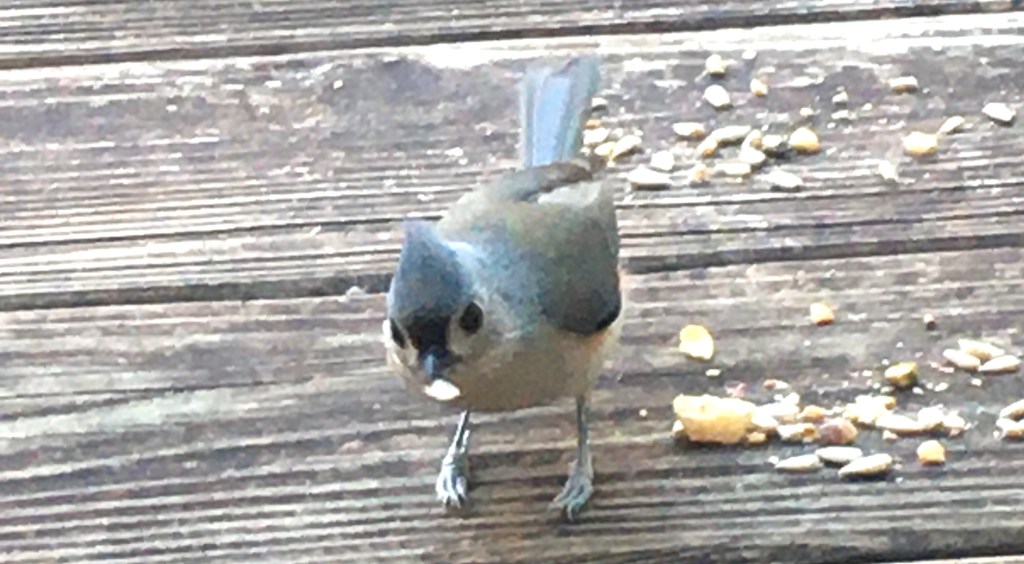
I’ve always had a heart for birds, and my heart swells with awe for winter birds. They inspire the practice of reverence in me. All season long, I never tire of watching birds that have migrated here for winter such as juncos, sparrows, and the beloved hermit thrush. Our home becomes theirs as they’ve joined the family of our year-round feathered friends. 

My heart leapt with joy the morning I saw a hermit thrush as I had been anticipating its arrival for several weeks. I was keenly aware that his journey was many miles during one autumn night, and he arrived at our home— his home.

Its arrival inspired me to write this poem:

Hermit Thrush
Elegant with tones of brown.
Shy, kind, and gentle. You came last winter and stayed for awhile. Where do you go as the days grow longer? I’ve seen your kind in the deep woods.
You remind me to pause. May you find solace here.
~ Stacey Hayes

During the peak migratory months from September through November, my heart was filled with both wonder and deep humility for migrating birds. Writing this blessing for them was a balm for my worry as I imagined them dodging skyscrapers and navigating artificial light.

Reverence is practiced by acknowledging the gravity of their migration journeys. By beholding deep admiration for their beauty, habits, and understated songs. By offering hospitality, knowing their time in this particular place will come to an end.

Reverence reaches deep in the spirit—beyond observation and mindfulness, which can be paths to reverence. It is not only a feeling but a posture of the soul. In practicing reverence, our spirit connects deeply with another living being’s. We see its fullness—its gifts, strength and humility. There is a felt sense that my spirit connects with its spirit as if an invisible yarn knits us together, even if for a moment.

Reverence is defined as “deep respect for someone or something.” (Oxford Languages) and is derived from the Latin reverentia, or awe.

Reverence is a tapestry of attention, empathy, and expression.

We offer our attention as we carefully observe the being’s habits and personality. We offer empathy as we imagine what may bring it joy or suffering. We acknowledge its story, journey, hardships and delights.

Reverence may be so poignant that we may feel led to offer it expression in some way—through gratitude, a hope, blessing, painting or poem. It may stir us to compassion and invite tending such as offering protection or shelter.

Or perhaps we simply hold this experience within our heart as we go about our day—allowing it to engender wonder and care.

Much is written in psychological literature about the benefits of finding novelty in a change of scenery or traveling. Of seeking awe in new experiences. However, I find reverence in the ordinary — in the familiar song of the Carolina Wren whose tune resounds from our deck each morning. In the comforting predictability of cottontail rabbits munching in our side yard at dusk. And while my life is enhanced and my best self revealed in these moments, reverence in its purest form is ultimately not about me and my wellness. It’s about another, the vastness, and honoring the sacred in front of me.

Practicing reverence, I assure you, will make an ordinary day extraordinary. And thankfully reverence isn’t reserved for mountaintop experiences. It dwells in the familiar. It rests in the ordinary. It is enlivened by the intimacy of knowing the creatures around you.

Welcome the wonder of birds into your life by listening for their winter carols, hanging a bird feeder, and providing a bird bath.

Or, simply step outside your front door or peek outside your window. See what calls out to you and invites your attention.

Practice reverence to warm your soul on a cold winter’s day.

Autumn Leaves, Ecospirituality, Ecotherapy, Nature & Me

The Wisdom of Leaf Skeletons

Most of our attention goes to the brilliant leaf color this time of year. However, I’d like to recognize and honor an often unnoticed gift of the season. As we move deeper into autumn, leaf skeletons become scattered amongst crunchy and colorful leaves on the forest floor.

When I first became aware of a leaf skeleton, I was struck by its beauty – its starkness, delicate nature, and intricacy. The skeleton reveals the structure of the leaf and the veins that supported it with nutrients and water in previous seasons.

Though now delicate, those veins nurtured and nourished the leaf until energy was sent into the tree roots to prepare for cold weather ahead. Some fallen leaves become leaf skeletons. But not all do. The process requires a harmony of exposure and shelter. (Ultimately, all leaves join together as leaf litter that nourish the soil, trees, and creatures below it.)

The leaf skeleton is a gentle, yet poignant, visual reminder of what is life giving and spirit sustaining. Of what supports us when everything else is removed—the superficial comforts and distractions. When all else falls away, the essence remains. The life lines and supports that sustain us are revealed.

Sometimes it takes a shedding, a decomposing, a falling away to reveal what is vital. Just as food, water, shelter and sleep are essential for the body, there are essential elements for the spirit.

My Soulful Leaf Skeleton

Just as each human is imprinted with a unique and precious spirit, what sustains each spirit will be unique.

I researched leaf skeletons online to learn more about the biological processes. And I was surprised that the majority of results were how to create your own leaf skeletons artificially (as they have been treasured for their beauty for many years). However, I’d prefer to find, observe, and treasure them in their natural environment.

If you happen upon one, delight in the botanical wonder you have found. Invite it to remind you of the essence of what’s needed for your soul.

When everything else falls away—whether by choice or circumstance—what is there to uphold and sustain you? Embrace what nurtures your spirit this autumnal season.

And when you venture into the woods this fall, take comfort in the leaf skeletons and leaf litter that nourish the earth you walk upon.

To delve deeper into the gifts that autumn offers, explore the wisdom of autumn trees.